

Color gets most of the attention, but the finish decides how that color actually looks once it dries. It also decides how well your walls stand up to fingerprints and a wet sponge. Ceilings usually work well with flat paint because it reduces glare, while eggshell or satin can be a practical choice for walls that need regular cleaning. The best interior paint finish for your home depends on the surface, cleaning needs, and the look you prefer. Matte is another option if you want less shine. The right pick depends on how the room gets used and what shape the surface is in. Below, you’ll see how each sheen behaves and how to make the call for your own rooms.
What Should You Consider Before Choosing an Interior Paint Sheen?
A paint’s sheen tells you how shiny the surface will look once the paint dries. It also affects how the finish looks and performs in daily use. Before buying paint, consider these five things.
Light reflection. Higher-sheen finishes bounce more light back into the room. That can brighten a dim space but also throw glare off walls that catch strong sun.
Surface imperfections. Shine works like a spotlight on flaws. Dents and patched spots tend to stand out under a glossier finish. If your walls show real wear, plan on drywall repair before you lean toward a shinier paint.
Washability. Shinier paint usually wipes clean more easily, but the formula matters just as much as the sheen. Some modern matte paints handle scrubbing well, while some cheaper eggshells struggle with it.
Paint durability. Think about how often hands and furniture touch the surface. The product data sheet tells you more about durability than the sheen name alone.
Moisture resistance. Bathrooms and laundry rooms need paint made for humidity, often with mildew-resistant ingredients. Sheen by itself does not make a paint suitable for wet spaces. Pick a product rated for those conditions first and choose the sheen within that line.
Which Paint Finish Works Best for Different Interior Surfaces?
Every finish sits somewhere on a scale from almost no shine to a clear gloss. Where it lands affects the look and how forgiving the paint will be. One company’s eggshell can look close to another company’s satin, so compare samples instead of trusting the label. For unique surfaces or personalized finishes, professional custom painting and finishing services can help achieve the appearance you want.
Flat and Matte Paint for a Softer Appearance
Flat paint has almost no sheen compared with other common interior finishes. That makes it a strong match for ceilings and for walls with small dings. The trade-off is cleaning, because traditional flat paint can burnish or lose color when scrubbed hard.
Matte paint often has slightly more shine than flat paint, but some brands use the two names to mean nearly the same thing. Many manufacturers now sell washable matte formulas that keep the soft look and tolerate wiping much better. That makes matte a fair option for bedrooms and dining rooms.
Eggshell Sheen for Everyday Living Spaces
Eggshell has a low, gentle glow that you notice mostly when light hits the wall at an angle. It hides minor flaws better than satin does. It also handles light cleaning better than most flat paint, which is why it shows up in so many living rooms. A budget eggshell might show shiny marks after a few passes with a sponge. Read the cleaning claims on the label before you commit to a whole floor of it.
Satin Finish for Areas That Need More Cleaning
Satin has a visible, pearl-like sheen that reflects more light than eggshell. It usually tolerates more frequent washing too. Hallways and kids’ rooms often benefit from that extra toughness. Visibility is the catch with satin. It can show roller marks and dents more clearly than lower sheens do. Touch-ups may also “flash,” meaning the repaired spot looks shinier or duller than the wall around it.
Semi-Gloss for Selected High-Use Surfaces
Semi-gloss has a bright, obvious shine and a hard surface that wipes clean with little effort. Trim and doors are where it usually belongs. On those narrow surfaces, the shine looks crisp instead of harsh. Semi-gloss on a large wall can expose every bump and seam when sunlight rakes across it. It isn’t automatically the right call for kitchens or bathrooms either. A moisture-rated satin or eggshell may perform just as well with a softer look.
How Do Wall and Ceiling Paint Finishes Differ?
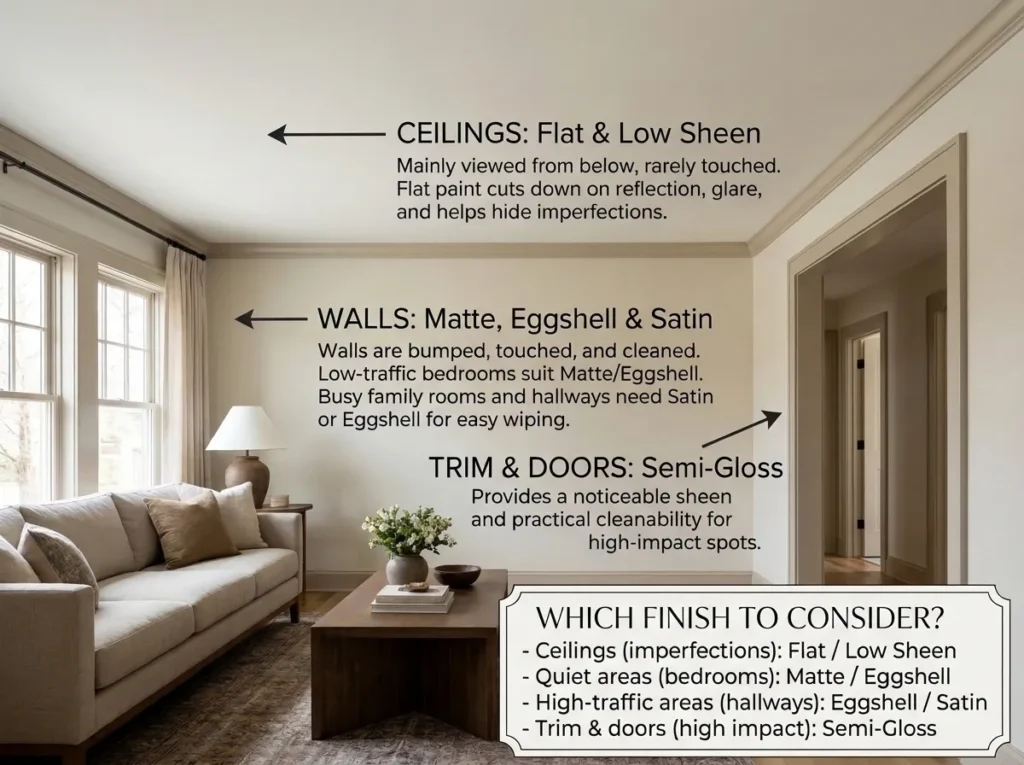
Walls and ceilings serve different purposes in a room. Walls get touched, bumped, and cleaned. Ceilings mostly get looked at from below. So they don’t always need the same finish.
Choosing a Finish for Interior Walls
Start with how the room gets used. A bedroom sees little traffic, so matte or eggshell can give it a calm look without much risk. A family room with kids and pets may need eggshell or satin to survive regular wiping. A busy hallway takes daily hits, which makes satin worth a look.
Lighting and wall condition come next. Older plaster or heavily patched drywall usually looks better with a lower sheen, especially near big windows. The best wall paint for your home balances traffic against light and surface condition. No single paint finish for walls wins in every room.
Selecting the Right Ceiling Paint Finish
Flat is the usual starting point for a ceiling paint finish. A shiny ceiling turns light from windows and fixtures into glare and highlights every seam in the drywall. Flat paint cuts down that reflection so the ceiling reads as one smooth plane.
That doesn’t mean flat paint hides everything. Cracks and water stains still need repair before any paint goes on. Kitchen and bathroom ceilings may also call for a moisture-rated product, which sometimes comes in a slightly higher sheen. Use the combinations below as a guide, not a strict rule.
| Surface or need | Finish to consider | Main reason |
| Ceiling with minor imperfections | Flat or low sheen | Reduces visible reflection |
| Bedroom or quiet living area | Matte or eggshell | Offers a softer appearance |
| Frequently used hallway | Eggshell or satin | Balances appearance and cleaning needs |
| Trim and doors | Semi-gloss | Provides a more noticeable sheen and practical cleanability |
| Moisture-exposed room | A product-rated finish suitable for the conditions | Formulation and room requirements matter |
How Can You Choose the Best Wall Paint for Your Home?
Comparisons only help once you apply them to your own rooms. Choosing the right finish can also influence future maintenance and repainting decisions. Work through these steps.
- Name the surface and its job. A back hallway and a stairwell ceiling face very different kinds of wear.
- Be honest about cleaning. Weekly fingerprint wiping rules out products that aren’t made for washing.
- Watch the room through a full day. Check it in the morning sun and again under your evening lamps.
- Inspect the surface up close. Hold a flashlight against the wall to reveal dents and texture changes.
- Test a sample on the actual wall. Paint a large swatch and let it dry completely before you judge it from across the room.
- Read the product details. Look for cleaning guidance and moisture ratings on the label or data sheet.
Frequently Asked Questions
These short answers cover questions homeowners often ask right before they buy paint.
Is Flat or Matte Paint Better for Ceilings?
Flat is usually the safer bet. Both finishes keep reflection low, which limits glare and softens small irregularities. A washable matte can make sense over a kitchen, though the ceiling’s condition and the specific product should guide your final choice.
Is Eggshell or Satin Better for Interior Walls?
Neither one wins everywhere. Eggshell gives a softer look and forgives minor wall flaws more easily. Satin carries more shine and generally handles frequent washing better. Eggshell suits living rooms and bedrooms, while satin earns its place in hallways that get dirty fast.
Does a Higher Paint Sheen Make Wall Imperfections More Visible?
Usually, yes. Shinier paint reflects more light, so bumps and roller marks catch the eye faster. The direction of your lighting plays a big part, and so does surface preparation. A well-prepped wall can carry satin nicely, while a rough one may look better in matte.
Final Thoughts
The right finish comes down to the surface and how the room gets used. Cleaning habits and the look you want matter just as much. Low-sheen ceilings paired with eggshell or satin walls cover most homes. Testing samples in your own light is what settles it.
Deluxe Painting Services handles interior painting for homeowners in Winchester and nearby Greater Boston communities. Our team can look at your walls and ceilings and help you match a finish to each room. If you’re planning a project, explore our interior painting services or call (978) 684-3952 to talk it through.